
Frozen sprinkler pipes aren’t only a problem for places with long, hard winters. A building in the Northeast might sit below freezing for weeks at a time, while a building in the South might see a handful of cold nights all year. Either one can end up with a burst pipe, a flooded ceiling, and a sprinkler system that’s out of service. Ensuring effective fire protection can help mitigate these risks.
Buildings in milder climates can be the most exposed, because they aren’t always designed with hard freezes in mind. When Winter Storm Elliott pushed through Texas in December 2022, sprinkler pipes froze across the state, and many systems had to be taken out of service to stop the leaks until repairs could be made. Proper fire protection measures are crucial in these scenarios.
This checklist walks building owners and facility managers through what to check before winter, whether your building runs wet sprinkler systems, dry systems, or both.
The requirements in this checklist come from NFPA 25, the National Fire Protection Association’s standard for inspecting, testing, and maintaining sprinkler systems. This checklist references the 2023 edition, which is the edition tied to the 2024 International Fire Code. The edition that applies to your building depends on what your state or local AHJ has adopted.
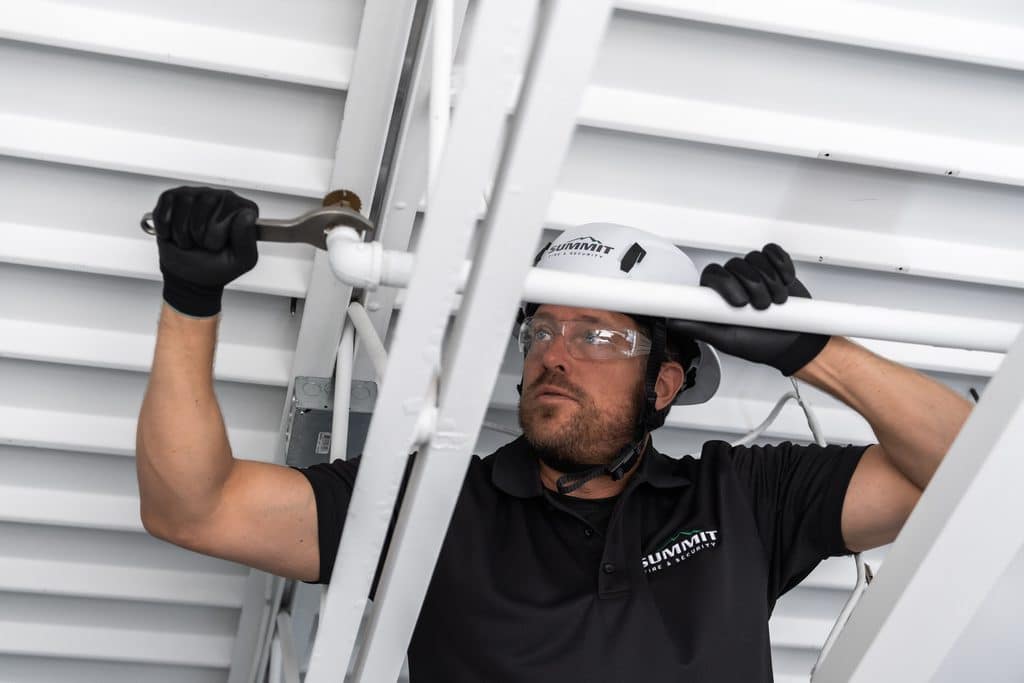
Where winter threatens a sprinkler system
Most commercial buildings are protected by wet pipe sprinkler systems, which hold water in the piping at all times. That water is also what makes them vulnerable in winter. Any wet piping that runs through a space that gets too cold can freeze and split.
Spaces that can’t be kept warm, like attics, parking garages, and loading docks, are often protected by dry pipe systems instead. A dry system holds pressurized air in the piping, which keeps a valve closed and holds the water back in a heated valve room until a sprinkler head opens. Dry systems are built for the cold, but they can still freeze. Condensation collects at low points in the piping, the valve room can lose heat, or the system can lose enough air pressure to trip on its own and fill with water.
The checklist below covers both.
Your pre-winter checklist
Find the cold spots
NFPA requires any area with water-filled sprinkler piping to be kept at 40°F or above. A building designed to code accounts for that, so the risk in winter comes from spaces where the heat is supposed to be working but isn’t. Before the cold arrives, walk the building and check:
- Vacant suites and unused rooms where the thermostat has been turned down or the heat shut off.
- Spaces served by their own heaters, like stairwells, vestibules, riser rooms and mechanical rooms, where a unit heater may have failed or been unplugged.
- Areas along exterior walls where a broken window, damaged insulation, or a gap in the building envelope is letting cold air reach the piping.
Restore the heat, make the repair, or seal the opening before temperatures drop. For any space you’re unsure about, place a thermometer and check it during the first cold nights.
Check heat tracing and insulation
Where water-filled pipe has to run through a cold area, it’s often protected by heat tracing, insulation, or frostproof casings. NFPA requires those protections to be inspected, tested, and maintained, and the protected pipe to be kept between 40°F and 120°F. Make sure heat tracing has power and is working, and replace any insulation that’s missing or damaged.
Test antifreeze systems
Some wet systems that protect cold spaces are filled with an antifreeze solution instead of plain water. NFPA requires the solution to be tested every year at the start of the heating season, before freezing conditions arrive, to confirm it’s still at the right concentration and is a permitted type.
The information sign at your sprinkler riser should note any antifreeze systems and where they are, or look for the annual antifreeze test in your inspection reports.
Get dry systems ready
If your building has dry systems, a few more items belong on the list.
The valve room is the one part of a dry system that has to stay warm, because the valve and the supply piping feeding it hold water at all times. NFPA requires valve enclosures exposed to freezing to be checked every day during cold weather to confirm they’re holding at least 40°F. If the room has a low-temperature alarm, weekly checks are allowed, but the alarm itself has to be inspected at the start of each heating season. Confirm the heater works and is set correctly, and that the door closes and nothing is letting cold air in. A heater that fails during a mild week is easy to miss, but if a cold front moves through overnight, you could end up with a frozen valve.
Even a dry system collects some water. Condensation from the compressed air settles at the low points in the piping, and residual water can remain after testing or a trip. Dry systems have drains at those spots, often called auxiliary drains or drum drips. NFPA lists low-point drain maintenance as a required item for dry systems, and it requires the information sign at each system riser to show where those drains are. Have them drained before freezing weather sets in, and again after any trip test or activation.
The air compressor is what keeps a dry system dry, maintaining the pressure that holds the valve closed. NFPA requires compressors used with dry systems to be inspected, tested, and maintained according to the standard and the manufacturer’s instructions, and air dryers to be maintained according to the manufacturer’s instructions. Have the compressor serviced before winter, and confirm it holds pressure without running constantly.
Small pinhole leaks are common on dry systems, and a healthy compressor covers them. When leaks add up or a larger one develops, the compressor has to work harder, and the system has less margin when the cold arrives. Have known leaks found and repaired before the season starts.
Make sure staff knows what a low-air alarm means
When a dry system’s compressor can’t keep up with air loss, the system sends a low-air alarm to the fire alarm panel. That alarm means pressure is already falling. If nothing is done, the system will eventually trip and fill with water. In an attic, that water can freeze, burst the pipe, and send water down through the ceilings and units below.
The alarm only helps if the person who hears it knows what it means. In many buildings, the people closest to the panel are property staff, maintenance techs, or security officers who may not be able to tell a low-air alarm from any other signal on the panel. Before winter, walk them through what to do when it sounds:
- Recognize the low-air signal and understand that it needs action, not just silencing.
- Report it right away to a designated person, such as the property or facility manager.
- Call your fire protection contractor to find and fix the cause.
- Keep the contractor’s service number posted at the panel.
Close out open deficiencies
Look back at your most recent inspection reports. Outstanding repairs are easier to schedule and less disruptive to complete in mild weather than during a cold-weather emergency, when contractors are juggling calls from across the area. The same goes for overdue tests, especially any that put water into a dry system’s piping.
Talk to tenants and staff about cold-weather habits
Some of the biggest winter risks come from everyday decisions rather than the systems themselves. Doors propped open during deliveries, broken windows, and thermostats turned down in empty suites or over holiday closures can all drop the temperature around sprinkler piping. Let tenants and staff know which habits put the building’s sprinkler systems at risk, and who to call if they notice a space getting cold.
If a pipe breaks or a system trips
Even with good preparation, a pipe can still freeze or a system can still trip. When it happens, the goal is to limit the damage and get protection restored quickly. If water is flowing, get the system’s control valve closed and call your fire protection vendor right away. Water from a broken sprinkler pipe can also damage fire alarm components, so the impact can reach beyond the sprinkler system itself.
A system that’s out of service is an impairment, and NFPA has specific procedures for handling one, including tagging the impaired system. Your AHJ may also require a fire watch until protection is restored.
Get ready for winter with Summit Fire & Security
Our local branches across the Western, Southern, and Eastern U.S. know the buildings, the codes, and the AHJs in the communities we serve. Our certified technicians inspect, test, and service sprinkler systems before the cold arrives, and we respond quickly when a freeze takes a system down, so your building is protected through the season and back in service fast if something goes wrong.
Contact Summit Fire & Security to schedule a pre-winter inspection of your building’s fire protection systems.